As-salamu alykum!
I apologize again to my readers on the tardiness of my posting. I figure the less often I post the more profound effects my posts will have! Either way much apologies.. Here is a nice and beefy one for you..
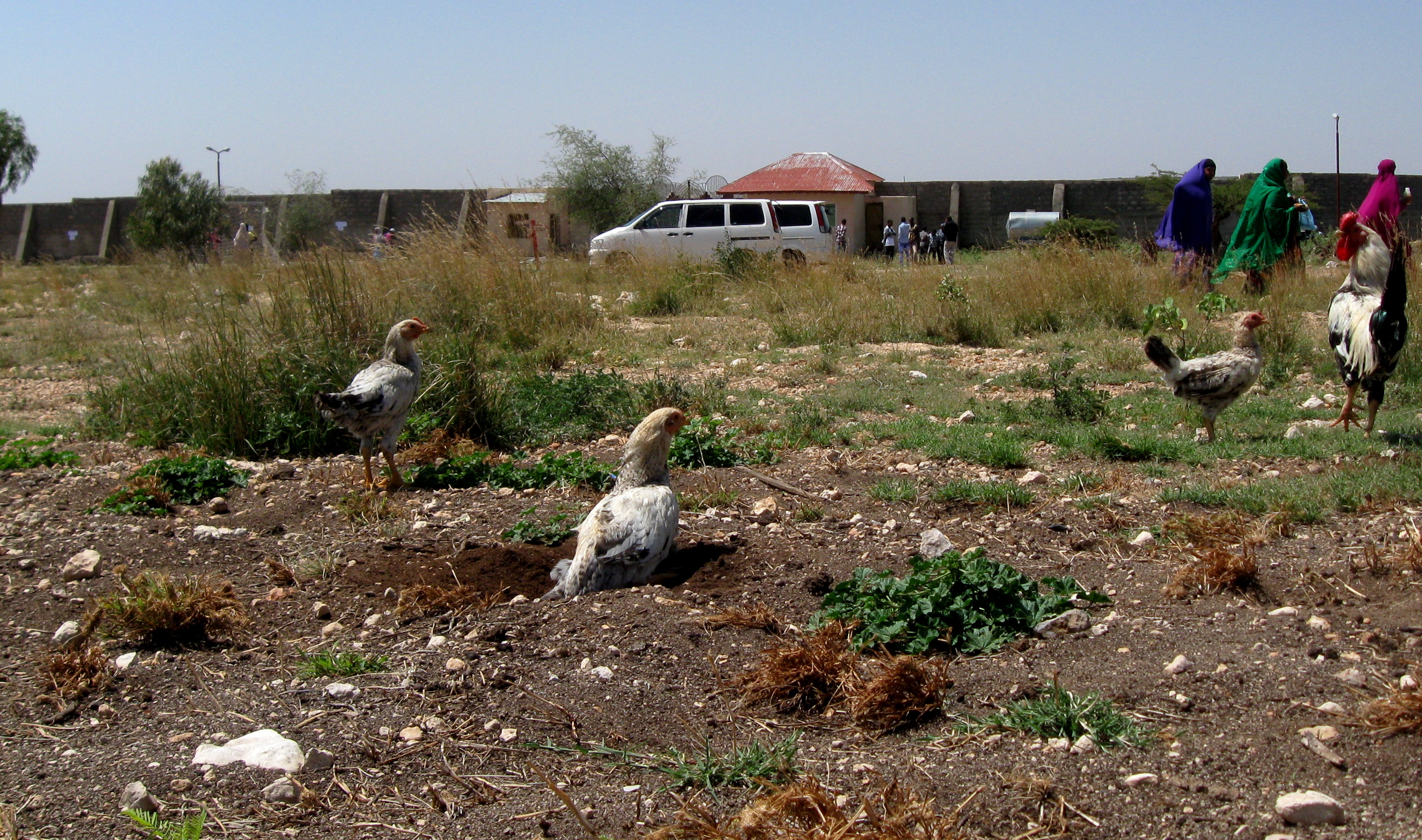
Abaarso School poultry..
Currently, I’m sitting in our schools library proctoring our entrance exam for 9th grade students. Students must take a 3 hour exam to qualify for a possible acceptance into Abaarso School. All of our current students took this exam before they became students at our school. We will take the top 40 scoring students out of the near two hundred that showed up today. This is a very exciting moment for the school since now have become well established and received renown recognition throughout Somaliland / Somalia. The last exam that we gave for the 9th grade was two years ago. Various troubles prevented us from giving our exam last summer. Our past 9th grade entrance exams have produced a turnout of roughly 40 students. Our current students were reminded of the when they took the exam and how the entire turnout consisted of a class room of only 40 students. We are very excited for the new 9th grade and have high hopes for the coming year..
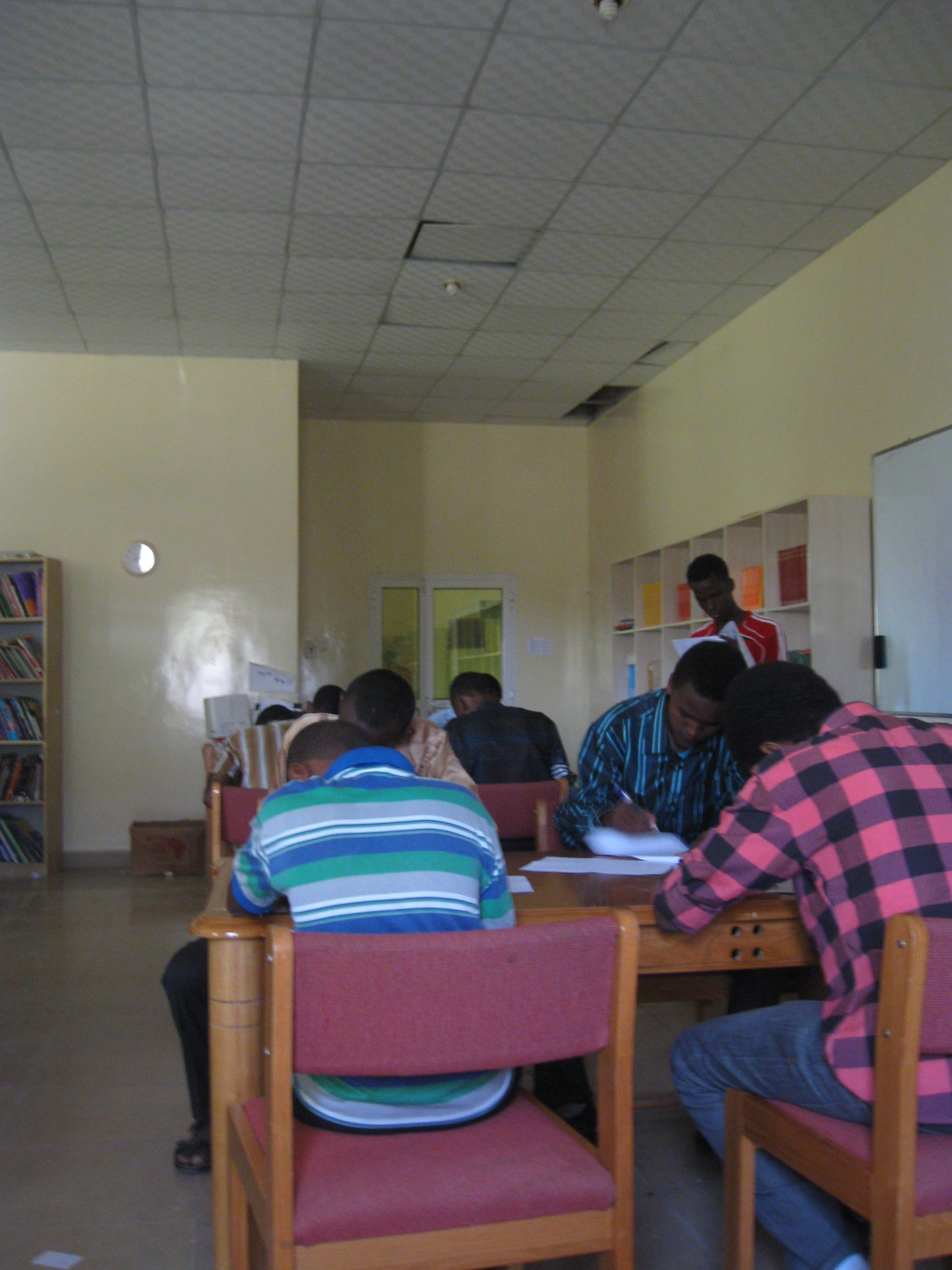
Over 175 students came from all over Somaliland to take our 9th grade entrance exam. The test consists of a mental math, math and English sections. The top 40 scorers are admitted into Abaarso School.
As for other school news, we now have a 7th grade as well which all began last month. I’ve been helping teach the 7th grade computer class until I hand over the job to one of our post-graduate students. The 7th graders are overall a vibrant and energetic addition to the school community. I’ve had to start a separate cross country team just for the 7th grade because I’ve had so many students interested in coming out.
The Chicken Fiasco
Up until last week I had not eaten any chicken, pork or beef for well over a year. A conscious decision that I made on my own for various reasons, I decided that I would like to try being a vegetarian for a while. Living in Somaliland has to be one of the hardest places not to eat meat. If I did not eat fish then I think I would be even skinnier than I am now. Most restaurants don’t offer a vegetarian option and the word for vegetarian does not even exist in Somali.
Those of you that know me will know that I’ve been trying to get a hold of a live chicken (to eat of course!) for quite some time now. I feel that we have become quite detached from the meat that we eat on a daily basis. We often don’t know where our meat comes from, what it was feed or how it made its passage into the after life. As a person who is trying to build his life away from relying on others (nearly impossible these days) I feel that following the whole process through would bring me closer to understanding why I may or may not eat meat.
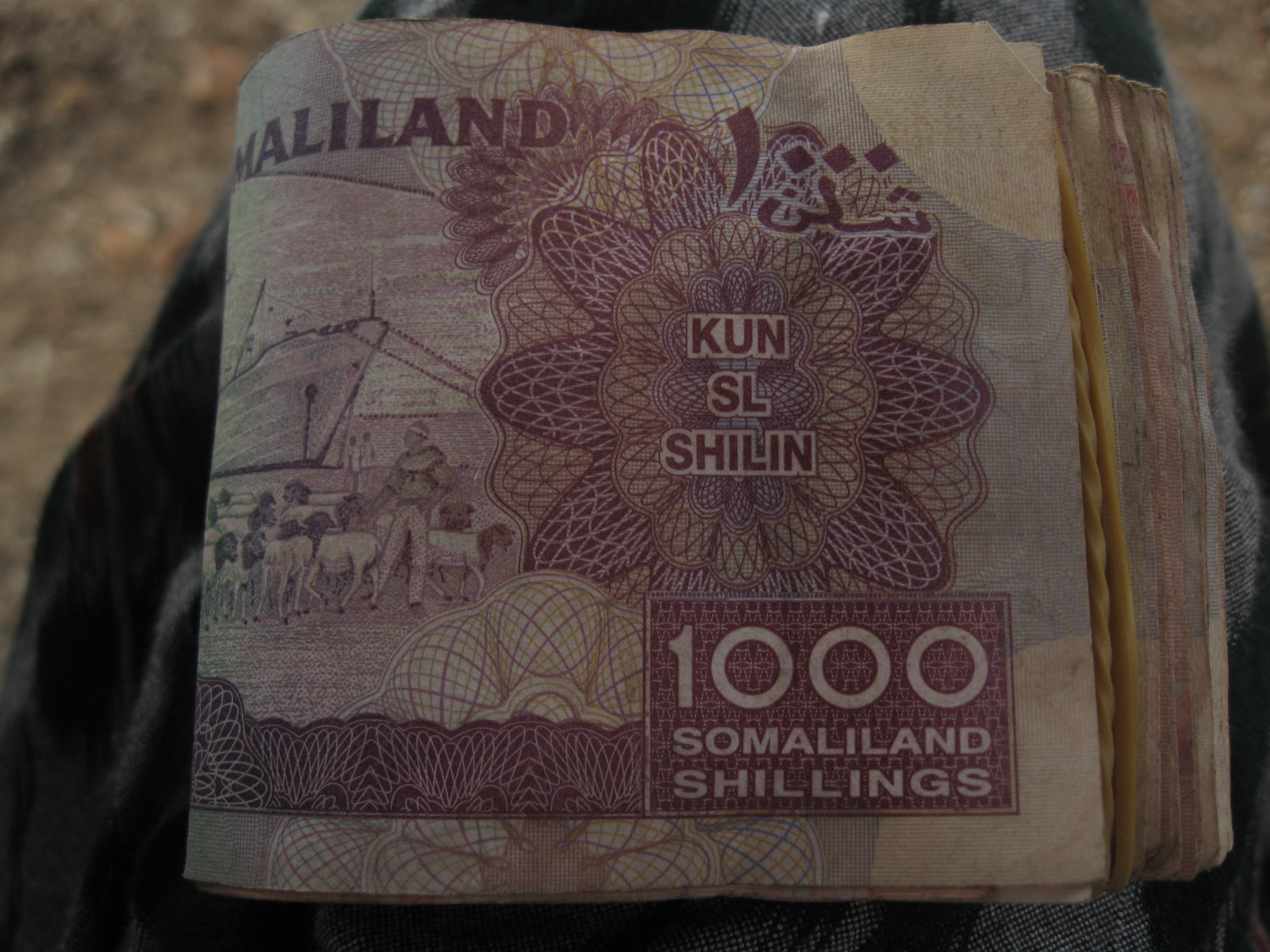
6,000 SOS (Somaliland Schillings) equal a dollar. The hens were about 25,000 and the roster was around 15,000.
I began last year by asking one of our students who runs our chicken coop if I could take one of our chickens to slaughter and prepare for a meal. He told me that he would rather bring me into the valley below the school to find a chicken that was raised in a fashion more conducive for eating. Our chickens were meant for producing eggs (even though they rarely do) and don’t eat the plentiful grass that grows in the valley. This year I approached Abdirahman Yusuf again and asked him if we could go on an adventure into the valley to find a chicken. Our quest began sometime last week when we went looking for people who take care of live stock that may own some chickens.
We ventured into the valley three separate times until we finally were able to come up with a few chickens. The first time we got caught in a massive rain storm, the second time we were only able to purchase a rooster and the third time we had success in bringing back two hens.
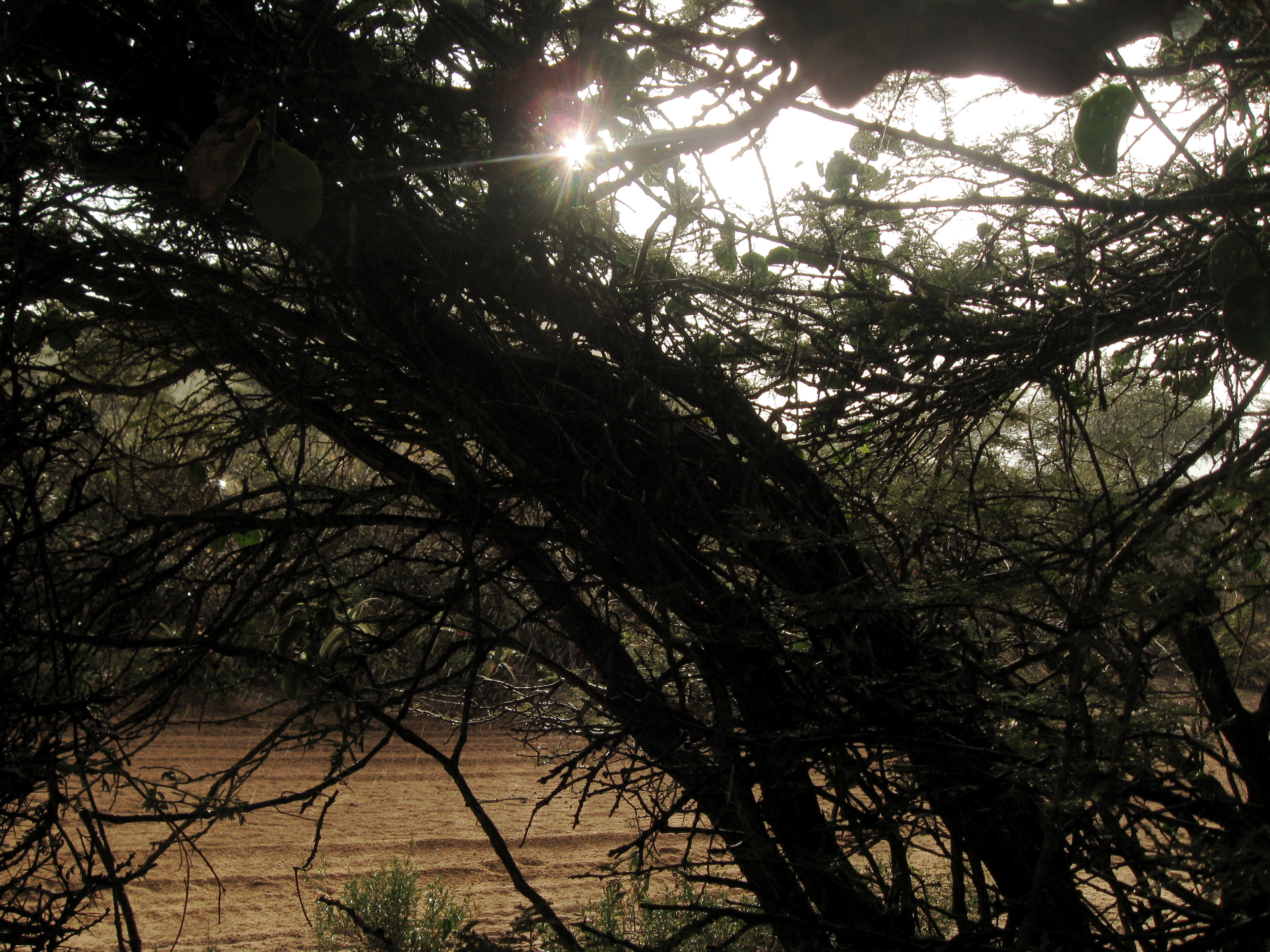
Our first attempt lead us underneath this acacia for protection from the rain
The valley below the school is a beautiful place where often we run with the cross country team. Since the second rainy season began wild life in the valley are abundant. Beira Antelope, Northern Ground Hornbills and variety of different birds which I still am working on identifying all make their home in the valley.
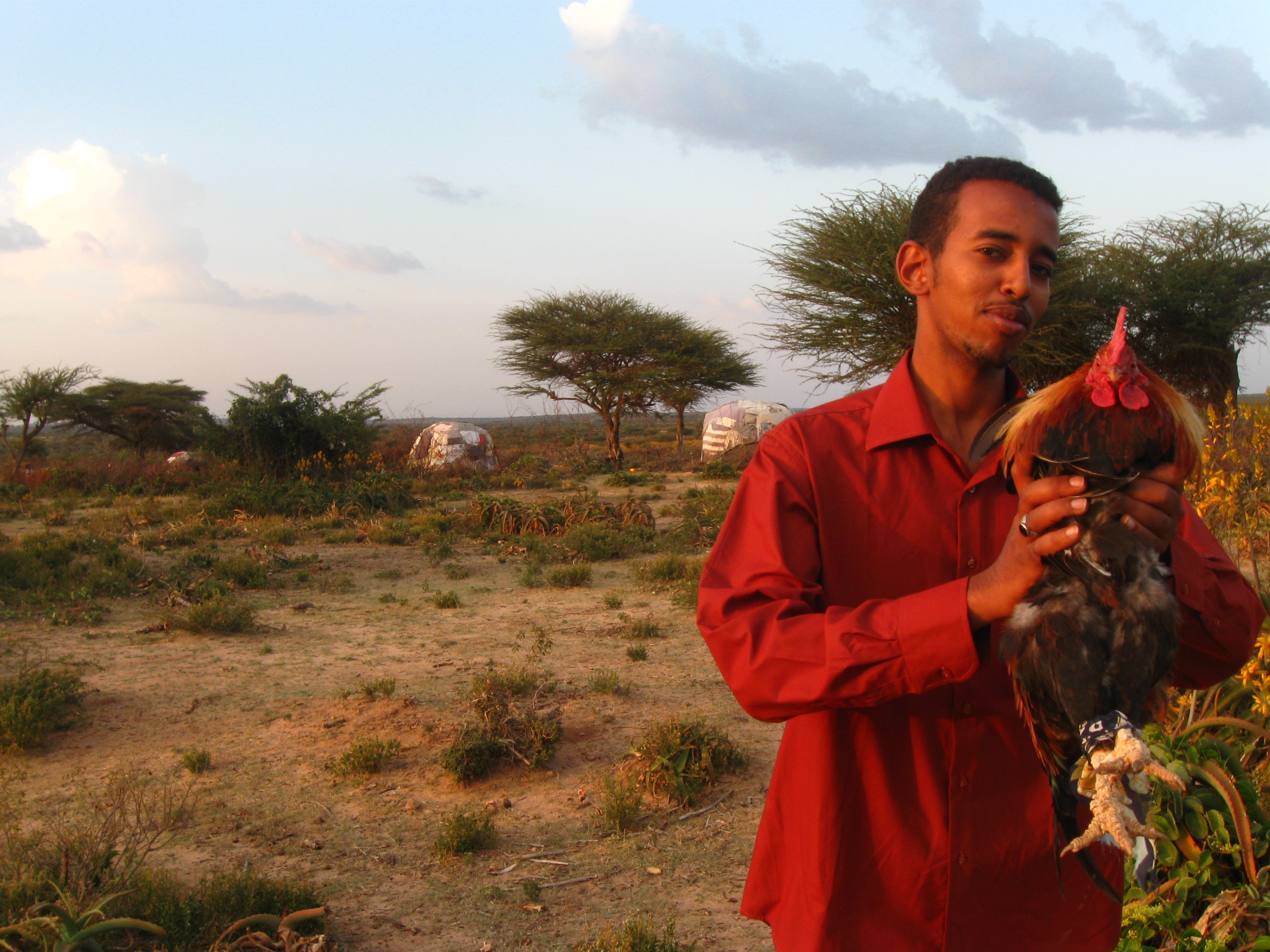
Mohammed with our first rooster
Apparently, Somali’s who raise chickens normally do not eat them and rather just use the hens for their eggs. If they are to eat a chicken, most of the time they eat the roosters since they are not nearly as valuable as hen. Most chicken that locals eat comes from out of the country. The frozen chicken nuggets that most of our staff eat are imported from Brazil! In the end our rooster cost about 15,000 Somali schillings (3 USD) and the hens were about 25,000 schillings or about 4 USD.
When the day finally came, we had quite a few students who were willing to help. Since I wanted to put the bird to rest the halal way I requested the help of two students that I felt were sincere in the understanding of how to properly slaughter the chicken. I was surprised to find out that most of our students had not slaughtered chickens before but had all slaughtered at least a few goats in their day.
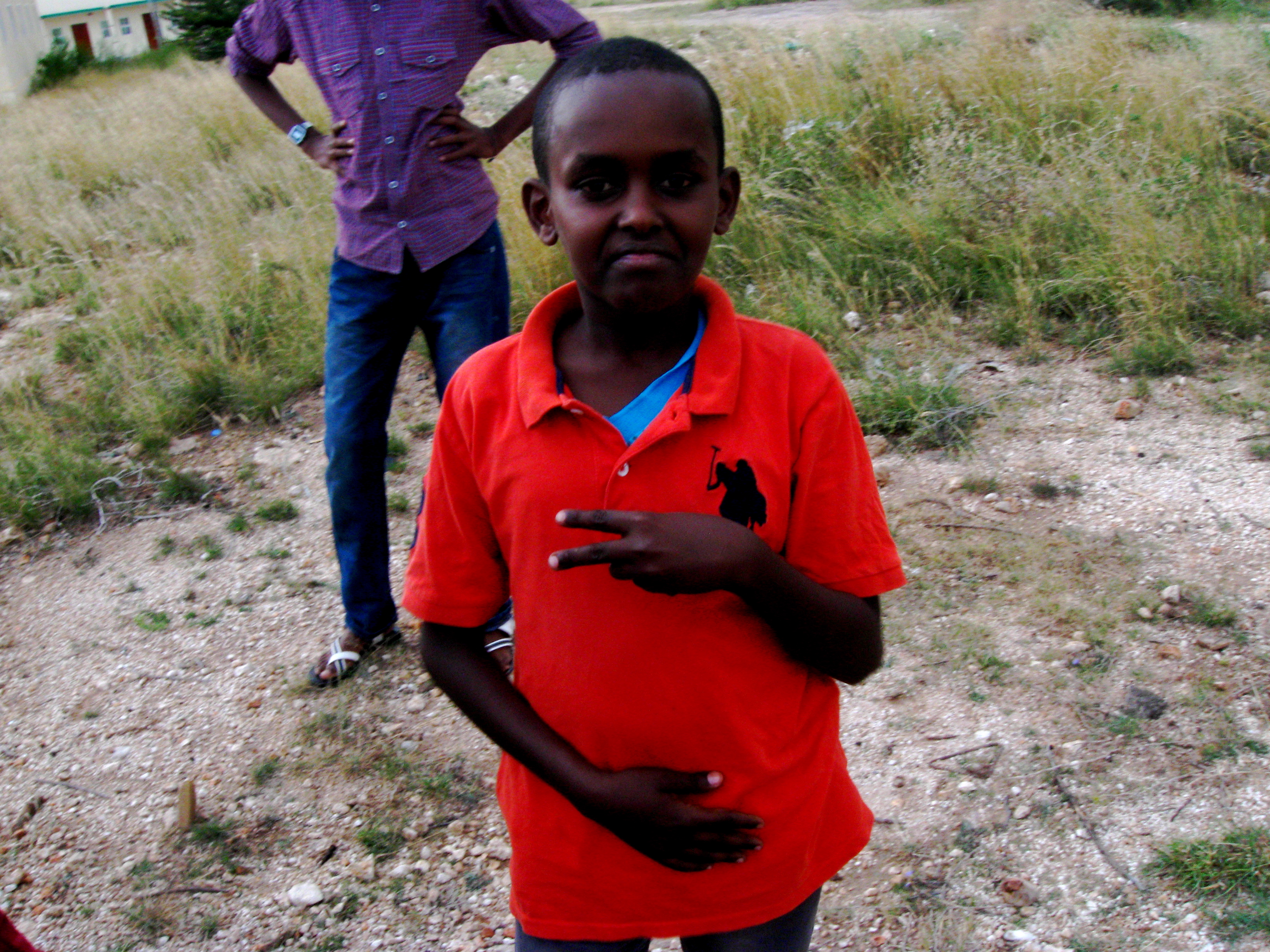
7th Grader Abdallah knows his chickens. He has raised, bred and killed over 10 chickens..
I’ll spare the details but all in all the process was rather easy. I said the words bismillah (in the name of god) and did the deed rather smoothly. Honestly, the most paint staking part was de-feathering, cleaning and preparing the chicken than the actual slaughter. Mohammed, Graham and I spent a good hour and a half de-feathering and trying to figure out how to remove all the necessary parts.
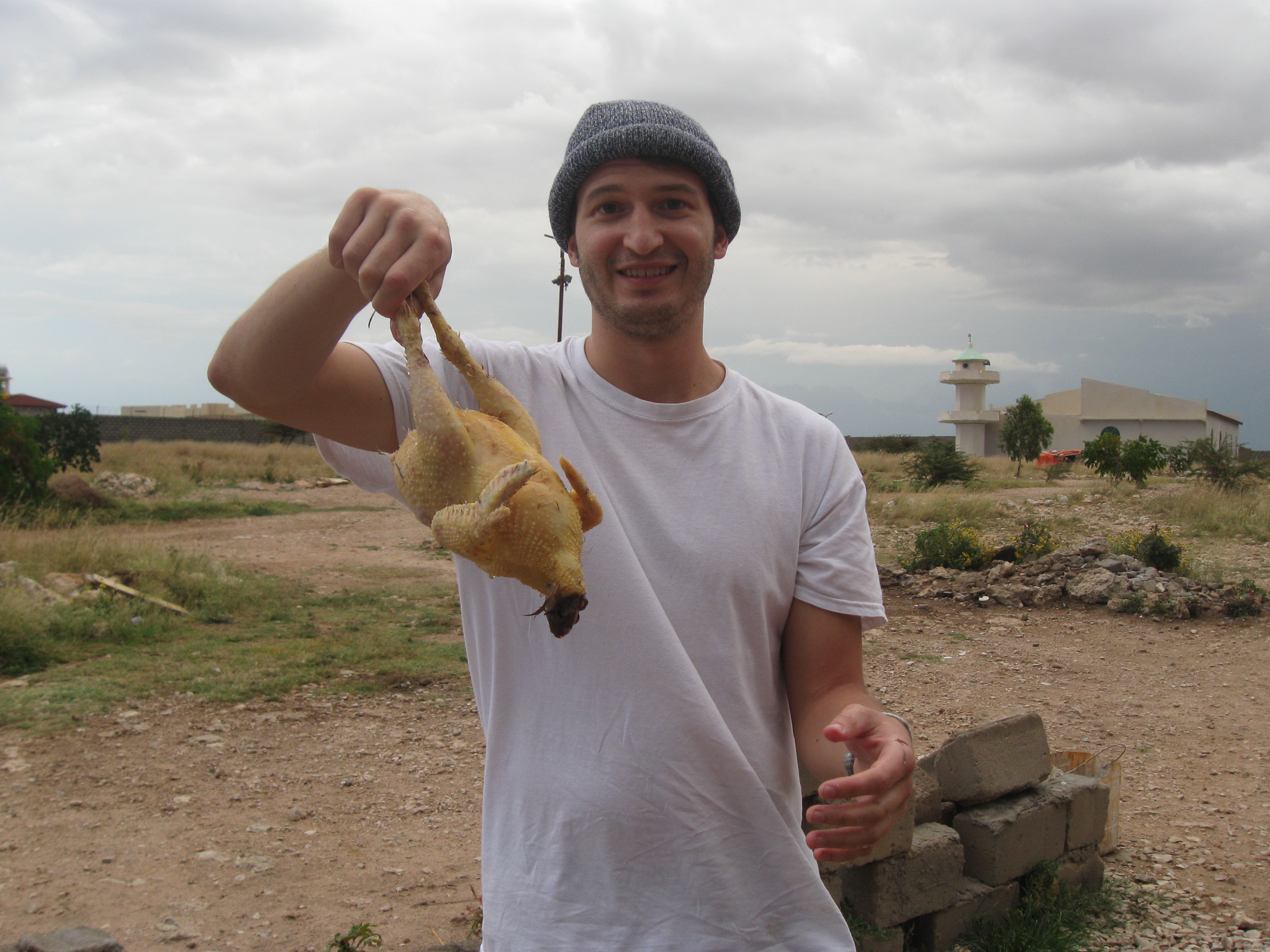
Cleaning was easily the nastiest part. Took close to an hour to get this bird fully prepared.
We cooked all three birds together in the oven using carrots, cabbage and onions along with salt, pepper and butter. They turned out well with the a few small exceptions. My lessons learned about finding, killing and eating these particular Somali chickens was the following..
1. Somali chickens are lean, get plenty of exercise and do not have much fat producing a bird that does not have enough meat and makes for a very chewy chicken.
2. Somali chickens have a good life full of running around and eating all kinds of random things such as rice and ants.
3. Chickens elsewhere are either fattened up before they are eaten or do not exercise enough so they taste good.
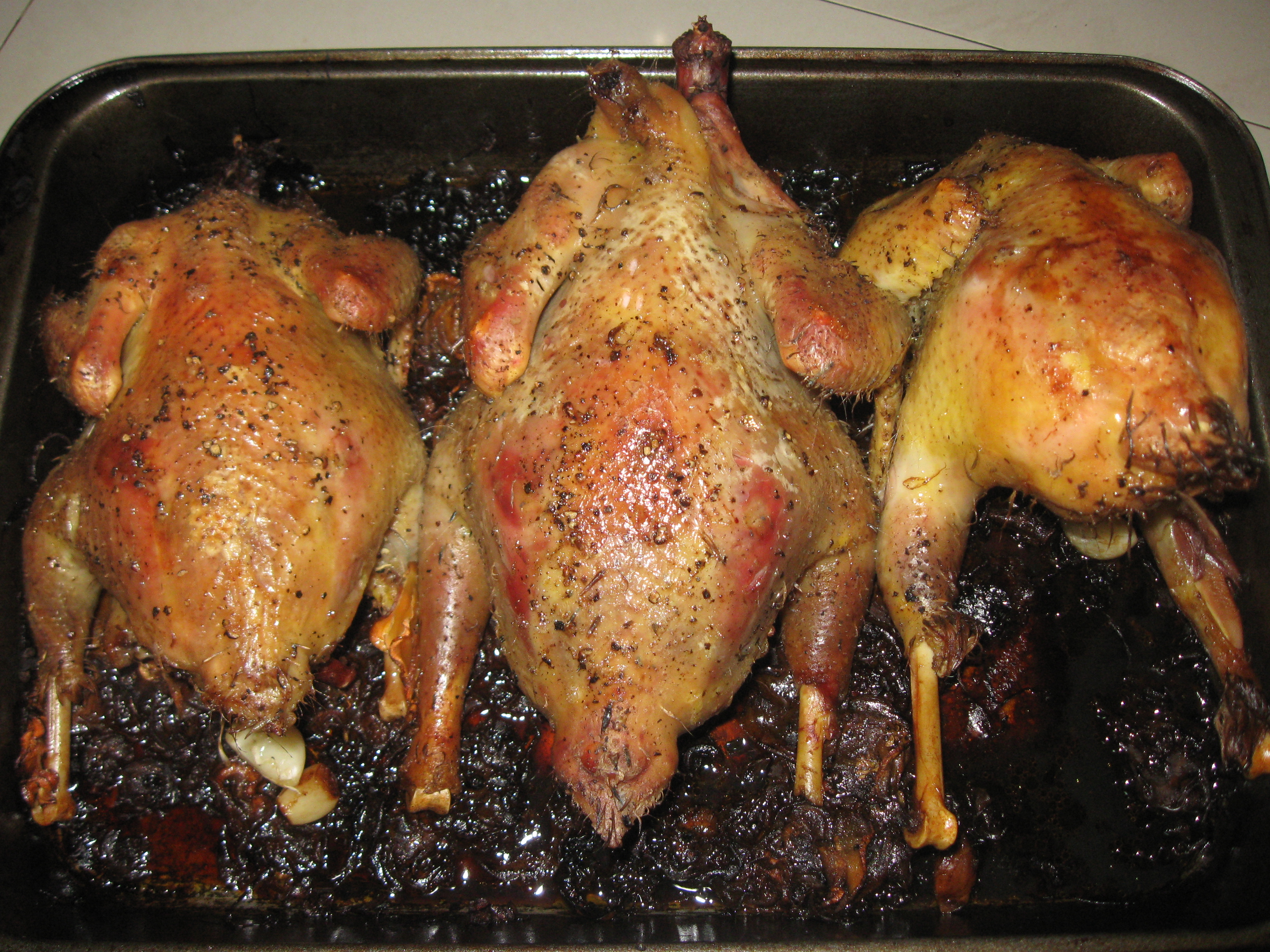
Final product.. Looks nice.. However, incredibly chewy..
Overall, I would like to repeat the experience but with a bird that I know will be worth the long strenuous process. I’ve decided that when I return back to the United States or continue to live elsewhere I will eat chicken as long as: I can kill it myself, have someone slaughter it for me or know exactly where I’m getting the chicken from. I will continue to not eat pork and beef and don’t plan on doing so for as long as possible. I am confident that I could kill a fish or chicken so I don’t feel as guilty when eating either. As for a pig, a cow or a goat I’m not so sure..
Community Technology in Somaliland
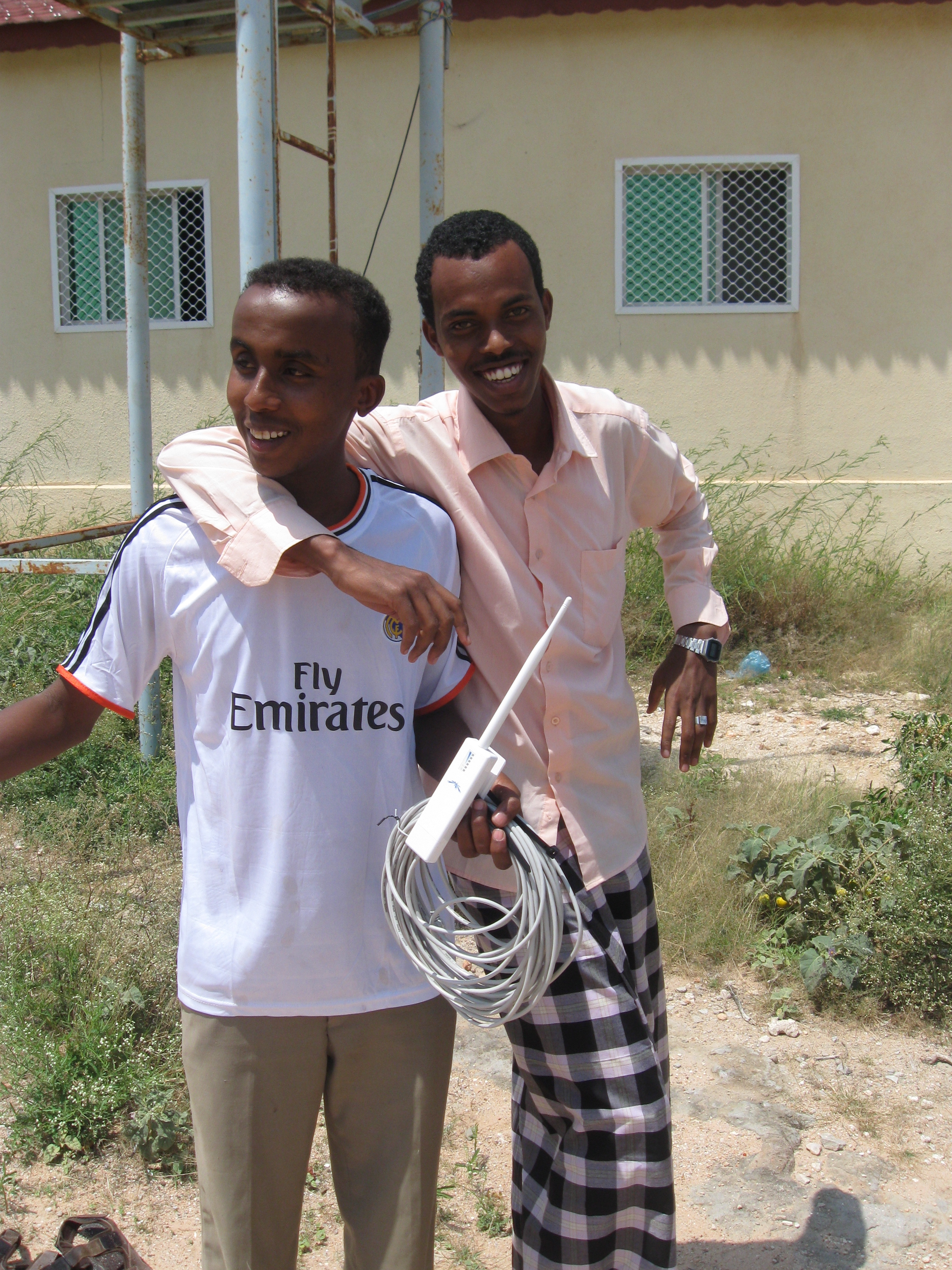
Hamse and Idiris getting ready to help build the student network.
As some of you may know I’ve been working round the clock (or at least when I have a free moment) on improving the technology situation at school.
So far we have seen the improvements of wireless access for the teacher housing complex, wireless access for the students in the computer lab and now thanks to a donation from the New America Foundation’s Open Technology Institute, wireless access for the rest of campus. I’ve also set up two school servers (using old netbooks) to run a variety of “local” applications that may be accessed only inside of the school.
The networking infrastructure in Somaliland is pretty atrocious therefore, we constantly rely on our “local” Internet to keep the school running.
Such programs that can only be accessed on the school’s networks include: a file sharing service called OwnCloud (students now cannot blame the Internet for not turning in assignments), a local file server to download the latest software updates and hopefully this term a “digital” library where students can download digital books for their computers or digital readers.
The Open Tech Institute has developed software for use on mobile phones, wireless routers and computers called “Commotion”. The goal of Commotion is to allow communities to set up local decentralized networks in areas that may lack certain resources. The type of networking technology used in Commotion devices is known as mesh networking. Creating what is called a “peer to peer” network, mesh networking can be very useful in a resource deficient environment.
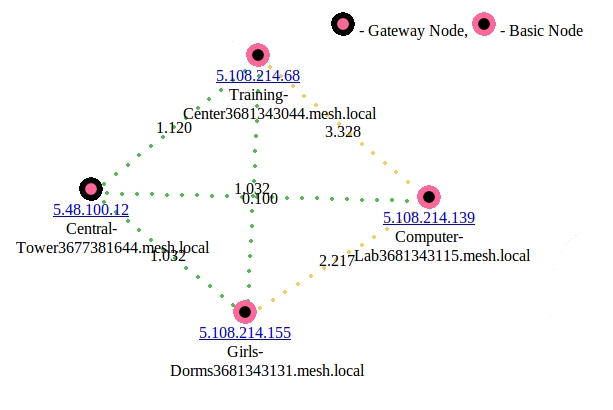
Nodes “communicating” with each other on the Student Network
Mesh networks work perfectly for serving local applications and are “self-healing” creating a more sustainable self-dependent networks.
Self-healing involves nodes or devices on the network constantly staying in communication with each other. Therefore if one node is disconnected data packets getting sent through the network will find the best possible route to their source.

Planning your network before you start actually building is always important. A rough sketch of Abaarso School with the distance between each node plus the height of teach tower where the nodes will all get placed.
Commotion has seen a great deal of success in Detroit, Brooklyn, India and now I’m happy to say Somaliland. Commotion is meant to be low-cost, portable (I literally brought the whole network on my carry-on) as well as easy to configure and set up. After testing out Commotion here at Abaarso School I can certainly attest to the aforementioned statement.
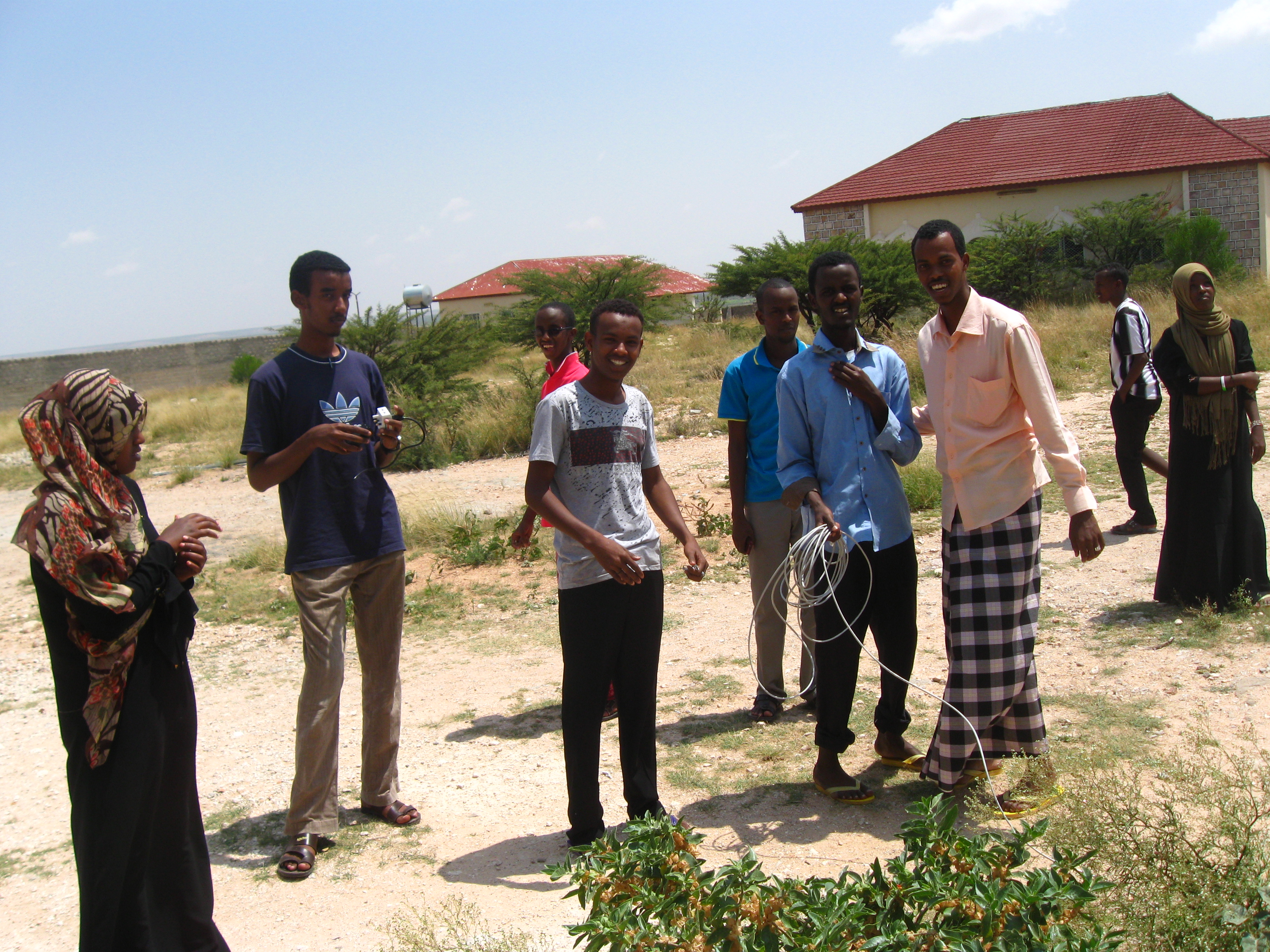
Getting ready to set up the network!
Using the donation and support from OTI, I’ve been able to teach students about mesh networking principals. I hope they will pass this information to their peers and one day create more mesh networks in Somaliland.
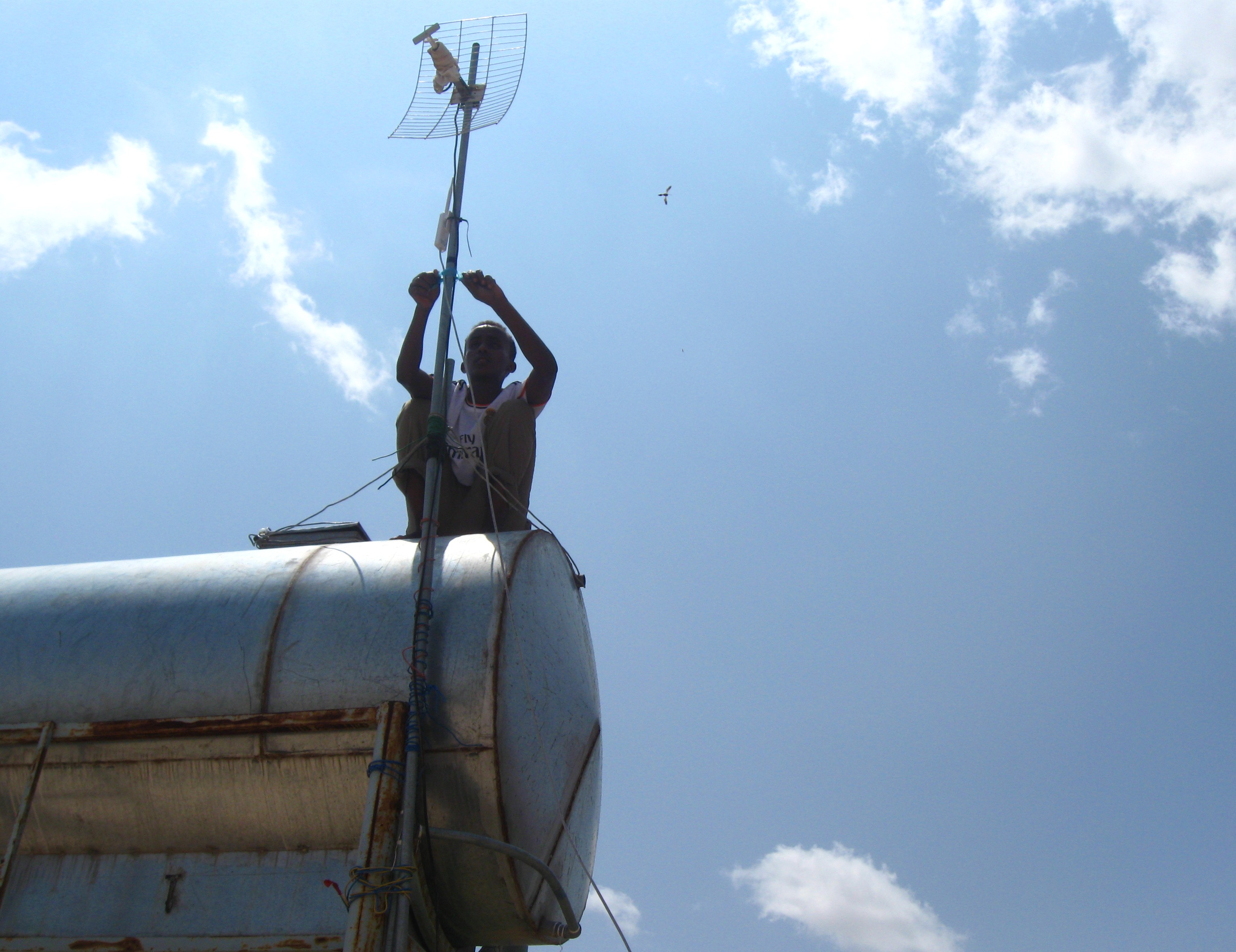
Hamse putting the finishing touches on the students first wireless “node” to their network.
Current technological innovations in Africa right now are pretty mind blowing. I’ve been finding that technology being invented in Africa is being used in other places other than Africa. If you are interested in learning more about tech innovation in Africa I would recommend checking out the following: The White African, Ushahidi and the BRCK. The BRCK is literally “a back up generator for the Internet.” One BRCK can provide Internet access through a variety of methods without electricity for up to 8 hours. I only wish I could pick up one for the school!
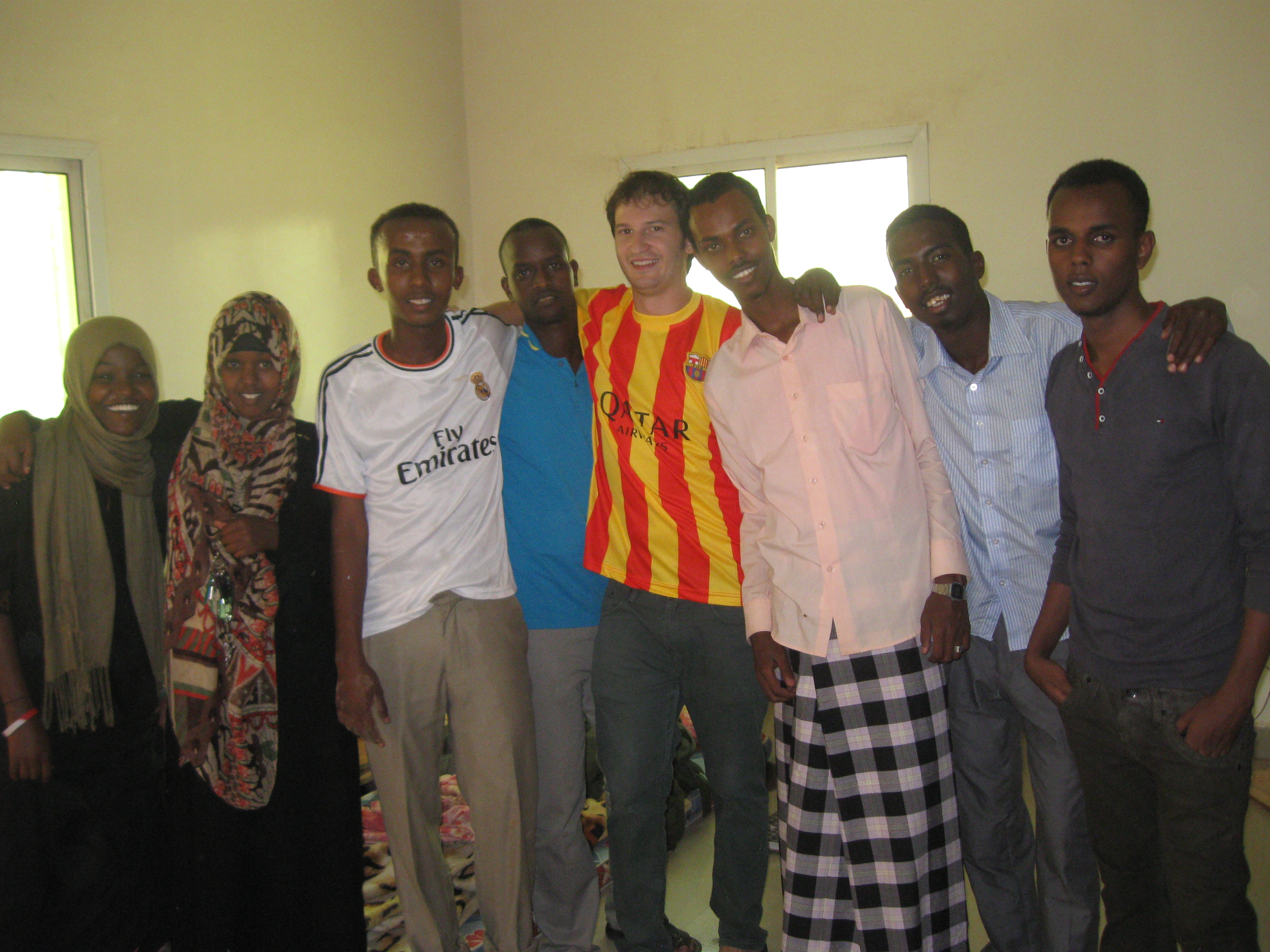
Success! The student internet can now reach the boys dorms and the training center!
Either way, coming back to Somaliland for this last term has been more than rewarding thus far. Of course there are the usual challenges that make life difficult here. I’ve been blessed to be given such an opportunity. I’m trying to stray away from thinking about my last days here until the time comes in December. For now my goals consist of continuing to teach, self-educate and travel. I’m still working on finding work for when my time is up in December so if anyone has any tips, ideas or opportunities please send them on over!